
Why Precast Operational Management Systems Are Critical for Success
The Problem with Traditional Precast Software
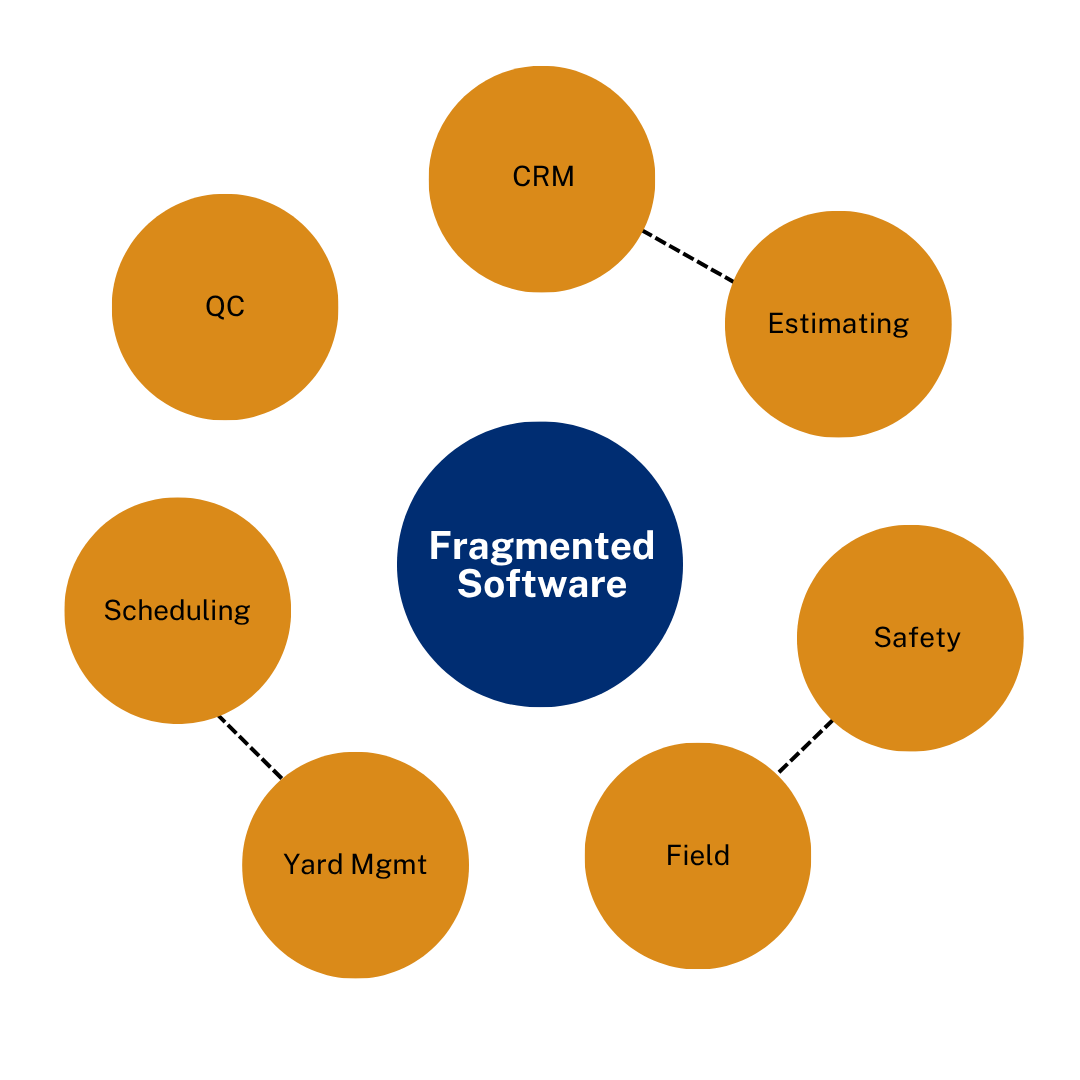
For years, precast producers have relied on a mix of precast software tools to manage estimating, production, quality, and delivery. While each solution may perform its function well, most operations weren’t designed as a cohesive system — they evolved over time.
The result is a patchwork of disconnected workflows. Information is passed manually between teams, data lives in multiple places, and leadership lacks real-time visibility into what’s actually happening on the plant floor.
Many operations today are still dealing with:
- Disconnected precast software systems
- Manual handoffs between departments
- Limited insight into real-time production status
Individually, these issues seem manageable. Together, they create friction that slows down the entire operation.
The Shift to Precast Operational Management Systems
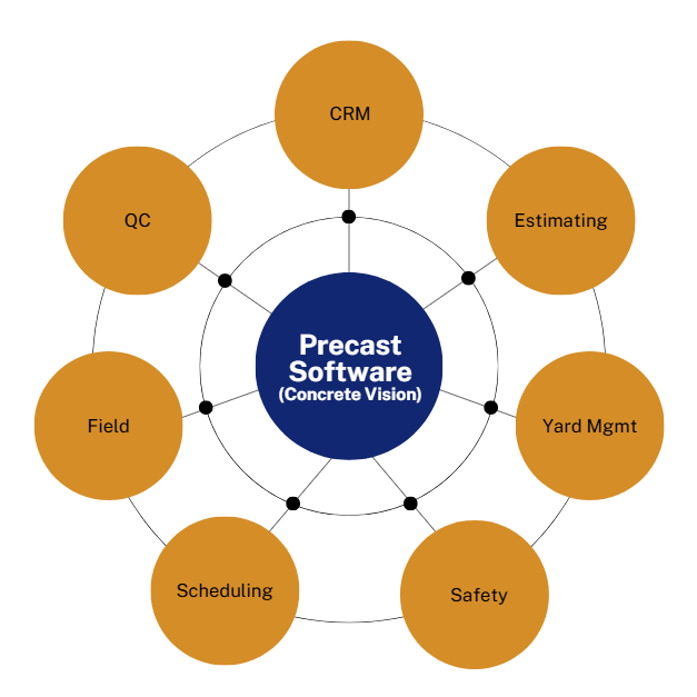
To stay competitive, leading producers are moving beyond standalone tools and adopting a precast operational management system, which is a connected approach that aligns the entire operation.
Instead of managing tasks in isolation, this model integrates every phase of the precast lifecycle. Sales, engineering, production, quality control, and delivery are no longer separate functions. They’re part of a continuous, coordinated workflow.
Platforms like Concrete Vision are built specifically to support this shift. By centralizing data and connecting workflows, they give teams a shared view of the operation and a stronger foundation for decision-making. That’s why the industry’s leading precast companies use Concrete Vision.
What Modern Precast Operations Software Should Deliver
Not all precast operations software is designed to operate at the system level. Many platforms still focus on solving individual problems rather than connecting the full picture.
A modern precast operational management system should go further, bringing clarity, alignment, and control across the business. At a minimum, it should enable:
- A single source of truth across projects and departments
- Real-time visibility into production and project status
- Scheduling that reflects actual plant capacity
- Consistent communication between teams
When these elements are connected, the operation becomes more predictable, efficient, and scalable.
Why Disconnected Systems Limit Performance
When precast software systems don’t communicate with each other, even well-run teams are forced into reactive decision-making. Leaders spend more time chasing information than using it, and small inefficiencies compound into larger operational challenges.
This often shows up as delayed decisions, duplicated effort, and misalignment between production and delivery. Over time, it impacts not just productivity, but profitability and client confidence.
If your precast software doesn’t connect your operation, it’s not just inefficient — it’s a constraint on growth.
How a Precast Operational Management System Improves Performance
A connected system changes how the entire operation functions, not by adding more tools, but by aligning the ones you already rely on.
With a true precast operational management system, improvements show up across the board.
Real-time visibility allows leadership to understand exactly where projects stand without waiting for updates. Teams no longer operate in silos because everyone is working from the same data. Processes become more standardized, reducing variability and improving consistency across projects.
Scheduling also becomes more accurate and proactive. Instead of reacting to conflicts, teams can identify and resolve them before they impact production. And with centralized data, reporting shifts from backward-looking to forward-thinking, supporting better forecasting and smarter decisions.
Precast software like Concrete Vision is designed to deliver this level of integration, helping precast producers operate with greater clarity and control.
Why This Matters Now
Across the precast industry, the demands on operations are increasing. Projects are more complex, schedules are tighter, and expectations for quality and transparency continue to rise.
At the same time, labor constraints and resource limitations make efficiency more critical than ever.
Disconnected precast software can’t keep up with these pressures. Operations that rely on siloed tools will continue to face bottlenecks, misalignment, and limited scalability.
In contrast, producers that adopt integrated precast operations software are better positioned to adapt, grow, and compete.
From Software to Strategy
The most significant shift happening in precast today isn’t just digital but also operational.
Producers are moving beyond managing tools and starting to build systems that support long-term performance. That means fewer reactive decisions, more proactive planning, and a stronger connection between data and strategy.
Concrete Vision supports this evolution by bringing estimating, engineering, production, quality, dispatch, and field operations into one unified platform, purpose-built for how precast plants actually work.
The Bottom Line
Relying on disconnected precast software is no longer sustainable for operations that want to grow.
A modern precast operational management system provides the structure needed to improve visibility, align teams, reduce risk, and increase efficiency. More importantly, it creates a foundation for scalable, predictable performance.
The question isn’t whether better precast software exists. It’s whether your operation is ready to move beyond tools and operate as a connected system.
Want to see how Concrete Vision can transform your precast operations? Schedule a demo.